
What areas do you serve?
We are based in Pinellas Park and work throughout Pinellas County, including St. Petersburg, Clearwater, Largo, Seminole, Dunedin and Palm Harbor, and in surrounding areas. Not sure if you're in our area? Contact us and ask.
How do I get a quote?
Fill out our quote request form with a few details about your project, or call us. Photos and rough measurements help us give you a more accurate quote.
Is tile waterproof?
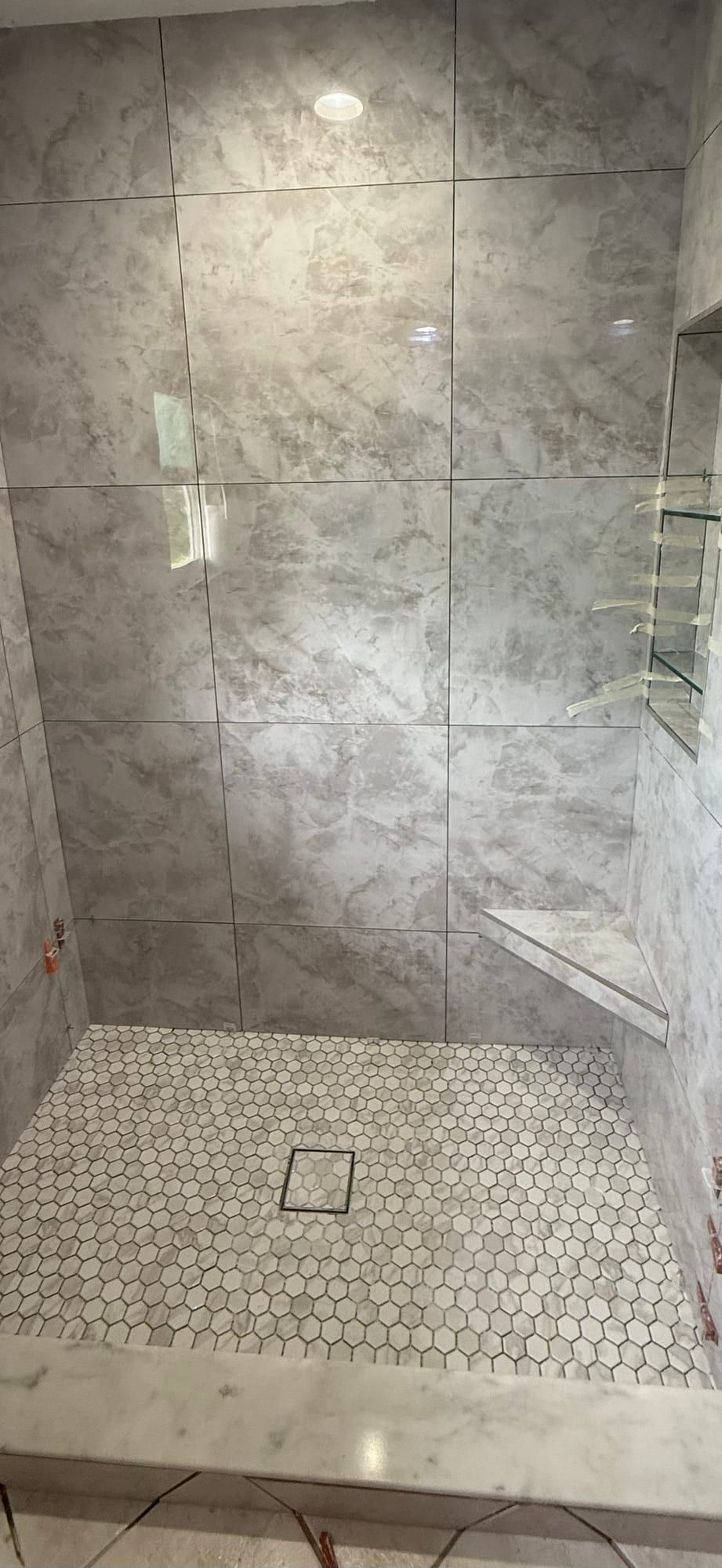
Short answer: no. Why does it matter? A typical shower sees about 1,100 inches of water a year. Pinellas County gets roughly 50 inches of rain a year, so your shower walls take far more water than your roof.
Make sure whoever builds your shower has a plan for waterproofing before any tile goes up. Read more in Is Tile Really Waterproof?
Why is tile a healthy choice?
Ceramic and porcelain tile are made from natural materials and are free of the chemicals in many other floor coverings.
- Hypoallergenic. Tile resists dust, dust mites, bacteria, mold and other irritants, which makes it a good choice if you have allergies or asthma. That matters in a humid climate like ours.
- No VOCs. Fired tile is inorganic and gives off no volatile organic compounds (VOCs), the gases from many other flooring products that can cause headaches and eye, nose and throat irritation.
- No binders or PVC. Tile contains no formaldehyde binders and no PVC, which is used in many other surfaces and contains phthalates.
Why is tile a green choice?
- It lasts. Installed correctly, tile can last for generations, so it rarely needs replacing.
- It's plastic free. Ceramic tile contains no plastic, and many tiles are made with recycled content.
- It saves energy. Tile's thermal mass helps moderate indoor temperature swings, so your air conditioning works a little less.
- It's often made close to home. Many tile makers source raw materials near their plants, cutting shipping emissions.
Why is tile a classic choice?
For centuries tile has joined art and architecture, adorning some of the world's greatest buildings. Whether you want a durable floor or a wall with a wow factor, tile can do both.
What types of tile are there?
- Porcelain: impervious (absorbs 0.5% water or less). Very durable, easy to maintain, and a great choice almost anywhere.
- Ceramic: fired clay like porcelain, but fired at a lower temperature, so it is softer and absorbs more water. Not a good choice for most outdoor areas.
- Mosaic: small tiles (under 9 square inches each), usually mounted on sheets.
- Encaustic (cement) tile: patterns made with colored cement, often called cement tile.
- Natural stone: marble, travertine, slate and other stone cut into tiles.
- Gauged porcelain panels and slabs: very large, thin porcelain, up to about 5 by 10 feet.
- Feature tile: 3D, metallic, stone-look and other tiles chosen to make a statement.
What do common tile terms mean?
- Running bond (brick joint): each row offset from the last, usually by half a tile. For tiles longer than 15 inches, an offset of no more than one third is recommended.
- Bullnose: trim tile with one rounded edge, used to finish an edge.
- Backer board: the board tile is set on. Some are waterproof; others need waterproofing in a shower.
- Grout: the material that fills the joints between tiles.
- Honed: a satin finish with little or no shine.
- Lippage: uneven edges between neighboring tiles.
- Membrane: a sheet or liquid applied under the tile, for example to waterproof or to stop cracks in the slab from reaching the tile.
- Thinset mortar: a blend of cement, sand and additives used to bond tile.
- Rectified tile: tile with machine-finished edges for precise size, which allows thin grout joints.
- Trim: shaped pieces such as bases, caps and corners that finish a tile installation.
Should I choose tile or luxury vinyl plank?
Both work well in Florida homes. Tile is the most durable, works anywhere (including outdoors and in showers) and lasts for decades. Luxury vinyl plank costs less, installs faster, and is softer and warmer underfoot. See our luxury vinyl and laminate page, or ask us when you request a quote.
Have another question?
Call or email us, or send a message through our contact form.