
Is Tile Really Waterproof? What Florida Homeowners Should Know
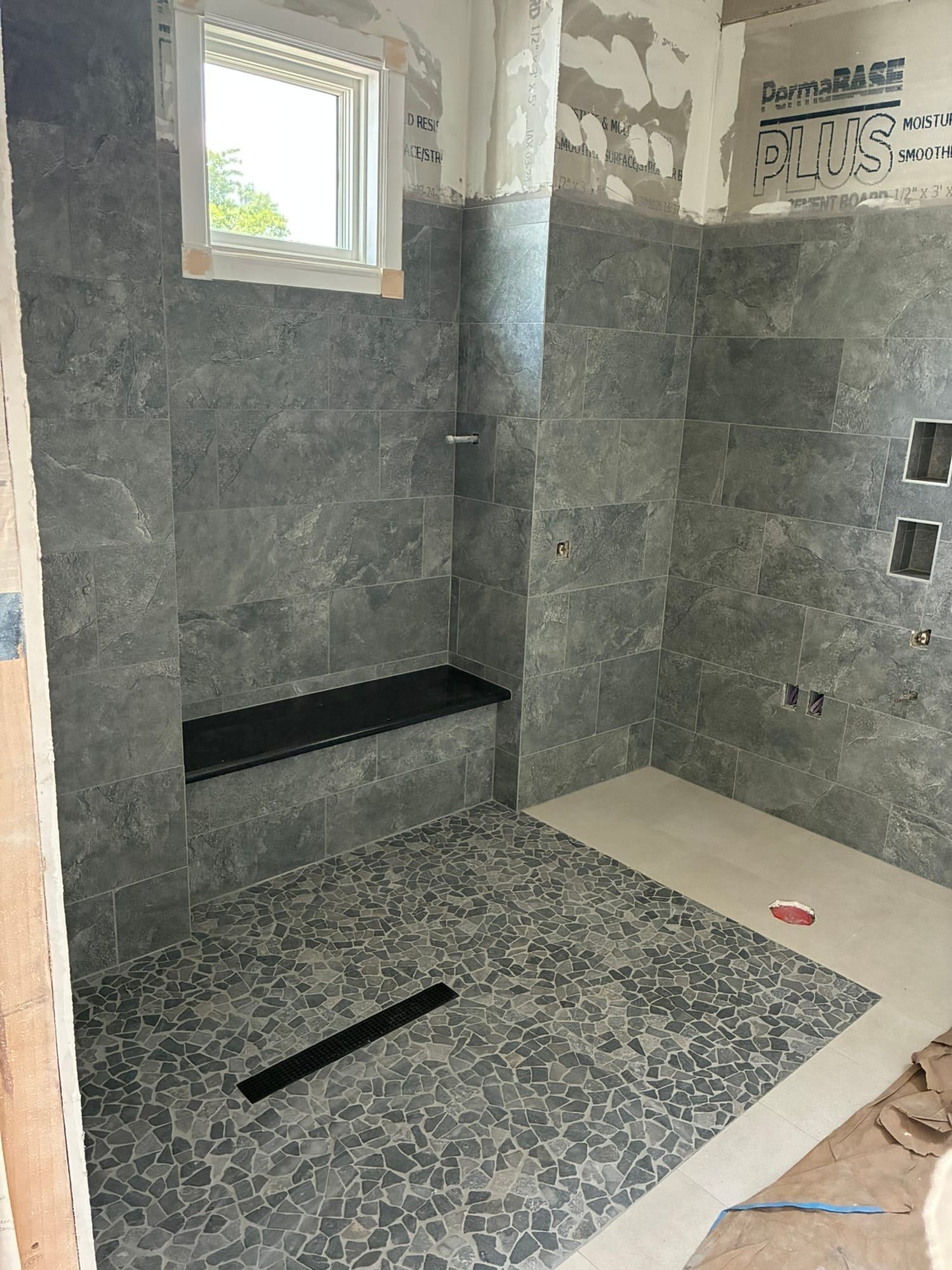
The short answer is no. The longer answer is still no. And while we're at it, grout isn't waterproof either. When it comes to tiling a shower, preparation is what prevents water damage, and in a humid climate like Pinellas County, that preparation matters even more.
Tile adds so much character and style to a room that it's hard not to use it. Let's look at how different tiles handle water, and at what really keeps your shower watertight.
Ceramic, porcelain and glass
- Ceramic tile is called "water resistant." Water doesn't damage it, but it does absorb some.
- Porcelain tile is often called "waterproof" because very little water gets into it, but some still can.
- Glass tile is the only tile that is truly waterproof.
Any of them can still fail if the surface behind the tile isn't properly waterproofed.
The four water absorption ratings
When you choose tile for a wet area, check its water absorption rating:
- Non-vitreous (low density): absorbs more than 7% water
- Semi-vitreous (medium density): absorbs 3% to 7%. Many ceramic tiles fall here.
- Vitreous (high density): absorbs more than 0.5% but no more than 3%
- Impervious (extremely dense): absorbs 0.5% or less. Porcelain is usually vitreous or impervious; glass, at 0%, is impervious.
Up north, outdoor tile has to survive freezing. Here in Florida we don't worry about frost, but showers, pool decks and lanais see a lot of water, so the rating still matters.
Your tile is only as good as what's behind it
The shower is where your home sees the most water. Once water soaks through the tile and grout, it can reach the studs and subfloor, swelling the wood and feeding mold. Add our year-round humidity and you have a simple way to turn a new shower into a big repair bill.
So hire a professional, and feel free to keep an eye on the work. If an installer tries to set shower tile directly on drywall, that's a sign to find someone else.
Six signs your new shower is built right
1. The shower liner is folded, not cut, at the corners
Only one outside corner should be cut to fit. The Tile Council of North America (TCNA) calls for the pan liner to run up the wall 3 inches above the curb framing and over the curb. Pre-formed corners help prevent one of the most common causes of leaks.
2. The liner is fastened on the outside of the curb
Nails or staples belong on the dry, outside face of the curb, never below the top of the curb on the inside where water sits.
3. No cement board on the curb
The curb should be built with metal lath and a sand and cement mix, like the shower pan itself.
4. A flood test before tiling
If a shower is going to leak, you want to know before it's tiled. The installer plugs the drain and fills the pan with water to just below the curb, then checks that the level holds.
5. Taped and mudded seams
Backer board seams need alkali-resistant mesh tape and mortar. Without it, you'll see cracks around the shower when the walls flex.
6. No mastic in the shower
Premixed tile mastic is an organic adhesive. It doesn't belong in wet areas, on cement board, on floors, or with glass or natural stone tile.
The bottom line
Tiling a shower takes experience, and the waterproofing steps can't be skipped. Now that you know the basics, you can ask the right questions and understand the work as it happens. If you're planning a shower in Pinellas Park or anywhere in Pinellas County, request a quote and we'll walk you through how we'd build yours.
Sources: BuildDirect, Floor Elf, DIY Tile Guy